Detailed Case ReferenceProject context, scope and technical guidance
Project-specific facts remain tied to the recorded scope. Technical sections explain the service context for users evaluating a similar requirement.
01
Project overview and recorded facts
This project reference documents work associated with “Waleed Alhowaish for contracting Est. Kindergarten & Elementary School at Al Malqa.”. The recorded location is Saudi Arabia, and the service classification is Concrete Repair, Industrial Flooring. The facility/project sector is تعليم. These facts provide the project-specific foundation for the page and are separated from the general technical guidance that follows.
The recorded scope states: Injection Works for Structural Cracks in Concrete Wall Soffit using Fosam materials. This wording is preserved because it is the most important project-specific evidence available in the Lamar Summit project register. Where a field photo, exact client name or more precise address is added from the WordPress project editor, it becomes part of the visible project record and structured data.
02
Location and geographic context
The geographic hierarchy for this reference is organized around Riyadh, in Riyadh. The archive uses the governorate or major city as the filter so smaller centers are grouped under the correct administrative destination rather than appearing as if they were separate governorates.
This geographic structure supports users who want to review Lamar Summit references by location while keeping the detailed locality visible on the project page. It also helps search engines understand the relationship between the project, its locality and the wider service area without inventing a street address that is not present in the project record.
03
Technical reading of the service scope
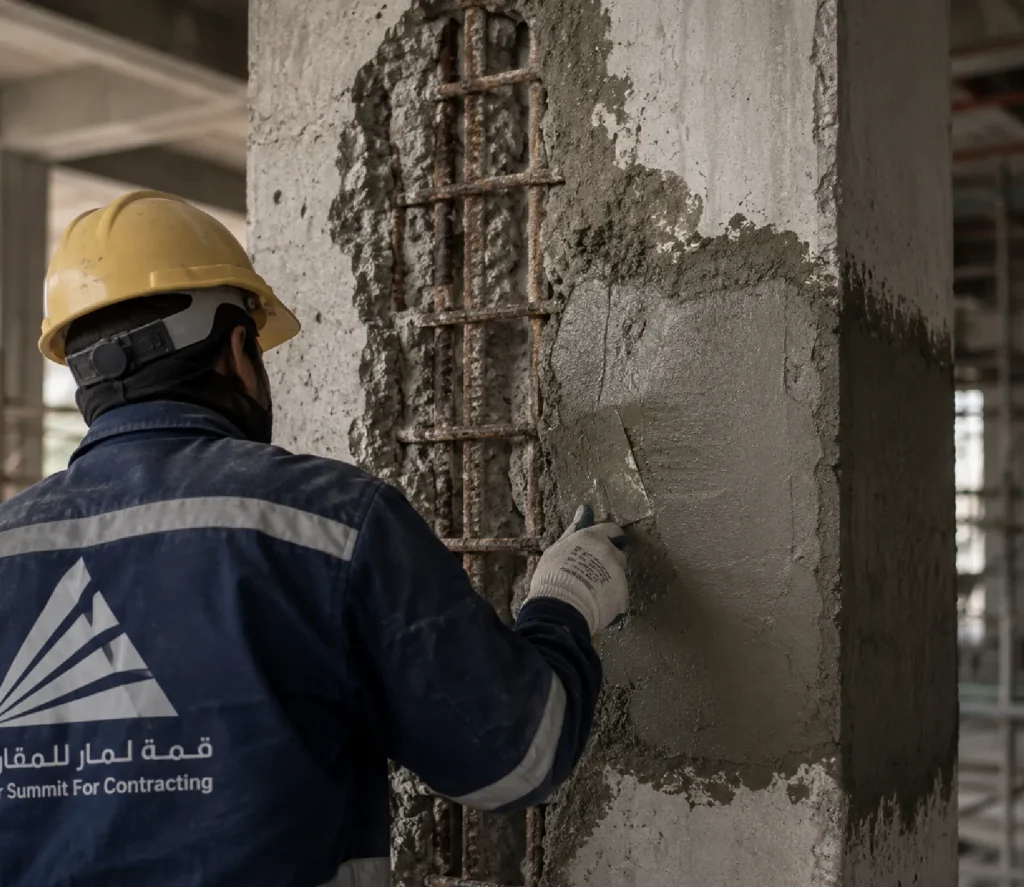
Concrete repair work starts with understanding the defect, the condition of the substrate and the cause behind deterioration. Preparation, removal of unsound concrete, treatment of exposed areas and selection of a compatible repair material are normally considered according to the engineering condition. The exact confirmed work for this reference remains the scope recorded above.
For repair projects, surface preparation has a direct effect on bond and durability. Edges, cavities, cracks and reinforcement conditions may require different treatment paths. This page does not assume a technique that is not documented; it explains the technical context around the recorded concrete-repair category.
Quality control typically focuses on substrate readiness, application sequence, curing requirements and compatibility with the existing element. These considerations help explain why a technical inspection is important before selecting a repair system for a similar facility.
04
Planning a similar specialist project
A similar project normally starts with a site review that defines the defect or performance requirement, identifies constraints and confirms the areas that need treatment. Photographs, drawings, existing specifications and operating conditions can support that review, but the final system should respond to the actual substrate and exposure.
The planning stage also considers access, phasing, protection of adjacent areas and the time available before the treated area returns to service. For industrial facilities, hospitals, warehouses, utility sites and active buildings, these practical factors can be as important as the material itself.
A clear scope helps separate repair, preparation, protection and finishing activities. It also makes it easier to coordinate quantities, inspection points and handover expectations. This project page therefore keeps the original scope visible before presenting broader service guidance.
05
Preparation, execution and quality control
Preparation is a recurring requirement across concrete repair, flooring, waterproofing and joint treatment. Weak material, dust, contamination, moisture or incompatible previous layers can affect performance, so the substrate should be evaluated and prepared for the selected system.
During execution, following the approved sequence, material data and site conditions helps maintain consistency. Mixing, application windows, curing and protection vary by system; the correct requirements should come from the approved specification and product technical data for the actual project.
Quality control is more useful when it is tied to defined inspection points rather than a final visual check only. Substrate readiness, completed repairs, applied layers and final condition can each be reviewed before the next stage proceeds. The specific tests for a project depend on its approved requirements.
06
Operational considerations for the facility
The project is classified under تعليم. Facilities in this category can have operational constraints such as traffic, cleaning, production, access, water exposure or scheduled shutdowns. The relevant constraints must be confirmed for each site rather than assumed from the sector name.
For maintenance and rehabilitation work, planning around operations can reduce disruption and protect completed areas during curing or handover. Sequencing the work into zones may be appropriate where the facility cannot be taken fully out of service.
The purpose of recording the sector and location on each project page is to provide useful context for decision-makers comparing similar references. It is not a claim that two facilities have identical conditions or that the same treatment should be copied without assessment.
07
Why documented project references matter
A project-reference page is more useful when it states what is known, what was recorded and what remains general technical context. This improves transparency for owners, consultants, procurement teams and facility managers who are evaluating experience relevant to a future requirement.
Lamar Summit project pages therefore separate the original project title and scope from explanatory material. If additional verified photographs, client information or exact location details are available, they can be attached to the individual project from WordPress without rewriting the full template.
For search visibility, the same structure also gives each reference a clear subject, service classification, geographic relationship, internal links and direct answers to common questions. These elements support discoverability while keeping the project facts grounded in the company record.
08
Next step for a similar requirement
Organizations with a similar requirement can use this project as a reference to understand the type of specialist work recorded by Lamar Summit, then request a technical inspection for their own condition. A new site should be assessed independently because substrate condition, exposure, dimensions and operational constraints vary.
When contacting the team, sharing photographs, the location, the affected area and a short description of the problem can help start the technical discussion. Drawings, specifications or previous repair information can be added where available.
The objective is to move from a general problem description to a defined technical scope that can be reviewed and priced on the basis of the actual facility. This is more reliable than selecting a system solely from a previous project title or a generic product category.
09
Additional project-reading note
The recorded scope should also be compared before treating two references as similar. Two projects may share a location and service category while differing in element type, material, defect or operating requirement, so each page preserves its own scope instead of relying on labels alone.
10
Additional project-reading note
When verified field images are added, descriptive alternative text should identify the work and location naturally without keyword stuffing. Images support the written record, while the project title, scope and facts remain the primary source of project information.
11
Additional project-reading note
The FAQ section is designed around direct user intent: what was recorded, where the project is located, which service is associated with it and how a similar requirement can start with an inspection. This structure is easier for readers and answer engines to interpret than generic promotional text.
12
Additional project-reading note
Headings, fact panels, technical context and related links break a long page into scannable units. The purpose of depth is to serve users who need detail while keeping the most important project facts visible near the top of the page.
13
Additional project-reading note
Accuracy remains the priority. If a locality, governorate, client or exact address needs correction later, the verified-project fields in WordPress can be edited so the page, filter taxonomy and structured data update from the same source.
Detailed project page prepared for human readers, search engines and answer engines using verified project data plus clearly separated technical context.